
Turn weeds into fertiliser


Fertiliser is a hot topic at the moment, with the many situations in the world and some of the Aussie farmers saying they're expecting to reduce their crops by up to 40%-60% this season due to rising fuel and fertiliser costs, it's the perfect time to be proactive and start growing, or grow more of your own food for you and your family, and selling to your community, through local enterprises like Grow Lightly.

One of the simplest ways to make a zero cost or low cost fertiliser is to utilise one of the things we tend to despise, the dreaded so called noxious weeds, which in reality are just plants, performing a function in a position that may be undesirable. Not only can some weeds be excellent edible food, the rest can be used with water and time, to create "Weed tea fertiliser", perfect for adding to a watering can to feed your plants and soil. If you can't stand stinky smells, or live in a small area with neighbours close by, this might not be for you, but in the average backyard, positioned away from the house or high traffic areas like a compost bin area, it is ideal.
You will need the following things, and you can scale it up or down to suit your situation and garden size:
A waterproof container such as a bucket/rubbish bin/plastic drum or water tank, you can use a bung plug/tap or simply scoop out or siphen the liquid to your filter. The container doesn't need to have a lid, but that might be preferable, however you do need it to be able to release gasses, so nothing air tight. I don't use a complete lid on my large plastic drums (which once contained organic cleaners from a dairy farm and are safe for this use), I cut a flap lid with a drill and jigsaw and added hinges and a handle so it remains open to collect rainwater. The hole is large enough to add weeds to and to fit the scoop I use (and old enamel saucepan) I often find small frogs and predatory wasps inside the drum hunting for insects to eat when the drums are quite full.
A filter, which could be as simple as a cloth over a sieve or funnel that you use to strain debris and any potential weed seeds from the liquid, to something larger for bigger volumes like a drum or rubbish bin which is filled with materials to filter out particles and allow the liquid to be drained and captured.

If you want to build a filter in a drum or container, you need to add materials into it to strain and filter out the different sized particles.
In to the bottom of the container where the tap is add the finer materials such as course sand, then add in larger and larger materials.
I chose to use course sand, followed by orchid bark, followed by cedar wood chips.
I then add my scooped up weed tea from the largest fermentation drum, and pour it into the filter, where large debris particles sit on top, and the finer particles are filtered as the liquid makes its way to the bottom of the container and only a yellowish liquid comes out from the tap at the base where I capture it for storage in another small drum with a tap.
Water, rain water works best, but town hose water is also okay, best to leave it for 24 hours before adding the organic materials so that the chlorine can evaporate and won't harm the microorganisms.
Weeds of course! Anything from dandelions, to runner grasses, to blackberry canes and creeping vines, if it's an organic plant, you can probably use it, just be sure to strain it. Avoid prunings from plants that have been sprayed with herbicides or pesticides or are toxic (like foxgloves), and anything with diseases or blight that can survive the fermentation process when making the weed tea.
A container to catch the strained liquid in, you could simply use your watering can for this and do small amounts at a time, or keep the strained liquid in something to use when you need it.
Something to stir it with, I recommend keeping that object for this purpose only, it can be a bit stinky. A long and strong forked branch, comfortable to stir with will suffice. Don't use anything to heavy to hold, especially if using a large drum.
How to set up your fermenting tea container.
Add rainwater or water from a hose to your largest container (remember to let chlorine evaporate for 24 hours for town water)
Add in your weeds, adding soil from around the roots too is of benefit to this fermentation, it will add additional microorganisms to the mix.
You can even add in a bit of manure to get the microorganism levels up.
You want the mix to be wet enough for the fermentation to happen, something more like a soup rather than a mash.
You can continue to add weeds and rainwater whenever you like or think that it needs topping up.
Stir the mixture regularly, every few days should suffice, eye protection isn't a bad idea when stiring, it can flick water around depending on how you stir it.
After about a month, quicker in summer or hotter weather, it will have happily been fermenting, and may have quite a pungent rotten stinky smell, this is how you know it's ready.
The weed tea is now ready to be strained with the filter to remove any potential weed seeds, and to separate the debris from the liquid so as to not clog up your watering can.
Filter the amount of liquid you want to use or can contain in your chosen vessle. If you are using a watering can to capture the liquid remember this ratio...
Dilution of weed tea fertiliser liquid to water for a watering can
= 1:10, 1 part weed tea fertiliser liquid to 10 parts water.
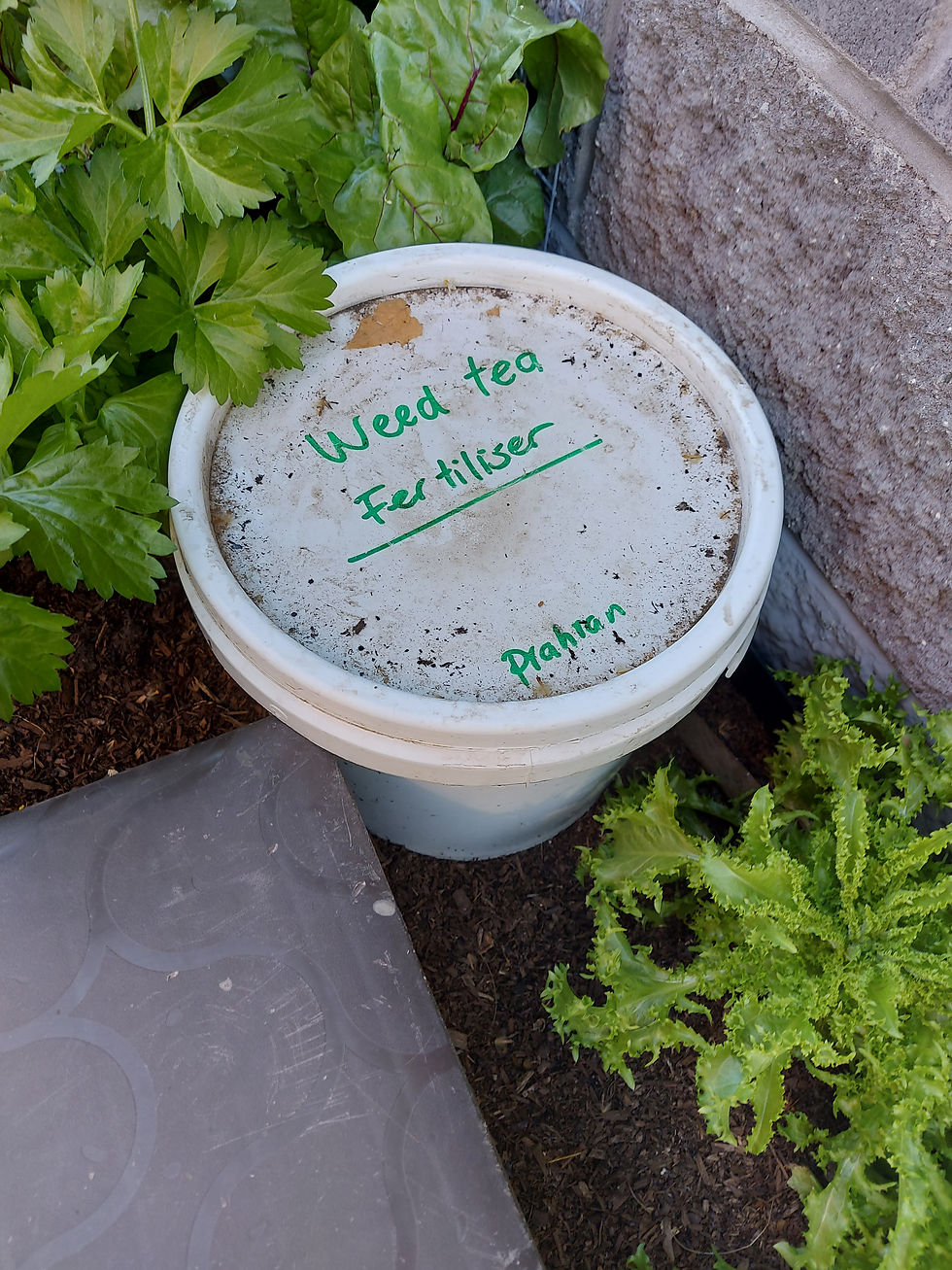
If you are storing the filtered liquid, remember to leave space for gases to escape, it doesn't need to be stirred, but should be kept in a cool/dark/dry place for a month or 2, if left for a long period of time it can create harmful pathogens. To check if it has been left too long, check for any signs of fizzing, a "gone off" sour small different to the smell when it was fermented, or any thick algae growth.
To apply the weed tea fertiliser, add your 1:10 ratio liquid to a watering can and water the soil and base of the plants, avoiding the leaves as this can cause fungal issues. Repeat this every 2-3 weeks during the growing season of your plant.
Citrus that are underperforming or showing signs of yellowing respond very well to this weed tea fertiliser and can handle more frequent applications such as weekly at the same ratio.


Comments